

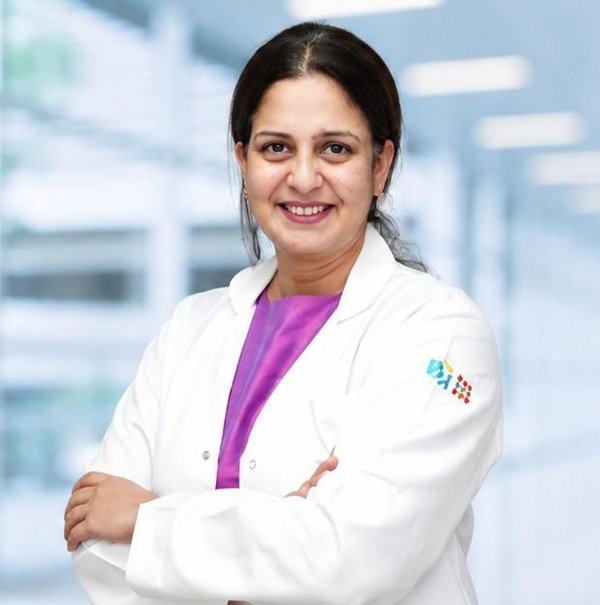
A conversation with Dr. Esha Pai, Senior Consultant – Surgical Oncology, Apollomedics Hospitals, Lucknow
Lucknow, India, 1 September: Dr. Esha Pai has spent over a decade operating on cancers most people would rather not think about. A gold medalist from Tata Memorial Hospital and now a surgical oncologist at Apollomedics Hospitals, Lucknow, she’s seen, up close, what happens when breast and cervical cancer — two of the most common cancers among Indian women — go unscreened for years. We asked her to walk us through the numbers, where the system is failing women, and what she’s personally trying to fix about it.
Q: Let’s start with the scale of the problem. How serious is this, really?
More serious than most people assume, and it’s not slowing down. Government data from the National Cancer Registry Programme shows breast cancer cases climbing from about 2.13 lakh in 2021 to nearly 2.4 lakh by 2025. Cervical cancer has followed a similar, if gentler, curve — from around 77,000 cases to over 79,000 in the same window. And it’s not just cases; deaths have gone up too, breast cancer mortality alone has crossed 1.03 lakh a year, up from roughly 91,700 four years ago. Between the two cancers, we’re talking about nearly 40% of all cancers diagnosed in Indian women. I don’t say this to alarm anyone — I say it because I see this exact story repeat in my OPD almost every single week.
Q: Why do you think the numbers are climbing so fast?
Honestly, it’s a bit of both good and bad news tangled together. Some of the rise is real — later pregnancies, obesity, longer lifespans, lifestyle changes, these genuinely increase breast cancer risk. But some of it is simply because we’re catching more of what was always there, as screening infrastructure slowly expands — even if it’s in a patchy fashion. What worries me isn’t that we’re finding more cancer. It’s when we’re finding it.
Q: What do you mean by “when”? What does the screening data tell us?
This is the part that should really worry us. The National Family Health Survey, NFHS-5, found that barely 0.9% of Indian women have ever been screened for breast cancer, and just 1.9% for cervical cancer. In Uttar Pradesh, where I practise now, it’s even lower — cervical screening sits around 1.5%, breast screening under 0.5%. Compare that to countries with organised national screening programmes, where breast screening coverage can cross 60-70% among eligible women, and you start to see the gap. Practically, this means the vast majority of our patients are being diagnosed only after they feel a lump, or notice bleeding that shouldn’t be there — and by then, the cancer has usually had a head start we didn’t need to give it.
Q: In your experience, where exactly does the system break down — awareness, access, or something else?
All three, honestly, and they feed into each other. Awareness is a real gap — a lot of women, especially outside big cities, simply don’t know that a painless lump still needs urgent attention, not a “let’s wait and watch.” Access is another — mammography and Pap/HPV testing tend to be clustered in tier-1 cities, so a woman in a smaller town often has to travel and lose a day’s wages just to get tested. And then there’s cost and stigma, which are quieter but just as damaging — screening still gets treated as optional or unaffordable, and cancer carries enough stigma that some women delay telling even their own families. The NFHS-5 data backs this up too — poorer, less-educated households screen far less, while women who’ve simply seen a health message on TV or radio are noticeably more likely to get tested. This itself tells you awareness campaigns aren’t just a nice-to-have, they actually move people. Also, the paradox in Indian society is that an individual who is a cancer survivor cured of disease keeps his treatment details a secret, while elsewhere news of a cancer-related death travels like wildfire – so society at large believes that people don’t survive cancer treatment as they are not hearing the success stories firsthand! For example, how many of us know that our former Prime Minister, Late Honourable Shri Atal Bihari Vajpayee ji, was a cancer survivor and was fit to run the country even after his treatment?
Q: Cervical cancer is one of the few cancers we can largely prevent. So why haven’t we?
That’s the frustrating part – we still see a “preventable cancer” being diagnosed as advanced cancer in stage IV . Cervical cancer is almost always caused by a persistent Human Papilloma Virus (HPV) infection, and we have two genuinely effective tools against it — the HPV vaccine for young girls, and simple screening tests like the Pap smear, or HPV DNA testing. We’re not short on science here. We’re short on delivery. HPV vaccination among Indian adolescents still lags well behind countries that’ve made it a routine part of school health programmes, and screening, as we’ve said, barely touches 2% of women nationally. It’s rare in oncology to have a cancer where we know exactly how to stop it before it starts — and we’re still not doing it at anywhere near the scale we could.
Q: Where does Apollo fit into fixing this?
Apollo has built cancer care as a genuinely comprehensive setup — medical oncology, radiation oncology, and surgical oncology across every organ system, plus diagnostics, all under one roof, working together than as separate silos a patient has to navigate alone. But I’ll be honest — hospital infrastructure alone doesn’t solve a screening problem, because that problem starts long before anyone walks through our doors. That’s really why Apollo has leaned so heavily into awareness and community outreach as well.
Q: Tell us about Mission Sankalp — I understand you’re personally driving this one.
I am, and it’s probably the initiative I care about most right now. Under Mission Sankalp, Apollomedics Lucknow offers free Pap smear tests and mammograms to every woman above 40 — no consultation fee, no screening charge, nothing. The thinking behind it is simple: strip away every excuse a woman might have for not getting checked, whether that’s cost, unfamiliarity, or plain hesitation. We run screening camps, work closely with community groups, and honestly, we just keep telling women to bring their mothers, sisters, neighbours along with them. What I find moving is how many women coming in for Sankalp, having their very first breast or pelvic examination, are already in their fifties. That’s a first exam, at fifty. It tells you exactly how big the gap has been.
Q: If you had one message for every woman above 40 reading this, what would it be?
Just two things, really. Go get a mammogram and a Pap smear, even if you feel completely fine — that’s literally the point of screening, catching what hasn’t caused symptoms yet. And please don’t wait for a lump or unusual bleeding to push you into a doctor’s office, because by then we’ve already lost the advantage early detection gives us. Mission Sankalp exists to make that first step free and easy, so there’s really no reason left to put it off. The science is genuinely on our side here — cervical cancer is preventable, and breast cancer caught early has survival rates well above 90%. What we need now isn’t better medicine. It’s more women walking through the door before symptoms force them to.
Women above 40 can avail free mammogram and Pap smear screening under Mission Sankalp at Apollomedics Hospitals, Lucknow.
To know more about Sankalp & Cancer treatment at Lucknow please click on this link https://www.apollohospitals.com/doctors/surgical-oncologist/lucknow/dr-esha-pai-womens-cancer-specialist-lucknow